Protection engineers routinely manage data that is constantly in motion: line parameters that shift as facilities are added or reconfigured, relay settings that evolve as protection schemes or operating conditions change, and in service relay configurations in the field—what is actually installed, wired, and left in the device—are updated whenever equipment is replaced, maintenance is performed, or logic is adjusted during commissioning.
Each of these changing elements influences the others, and all of them feed directly into the coordination studies used to evaluate system performance. When the underlying data becomes inconsistent—whether through outdated line values, mismatched settings, or differences between engineered and as left configurations—the engineer ends up spending more time reconciling discrepancies than performing actual analysis.
Much of the challenge arises from the way data is traditionally stored and exchanged. Short circuit models may carry local copies of relay settings; spreadsheets and file shares accumulate multiple revisions; and automated tools often leave a few manual touch points for transferring data. These fragmentation points introduce opportunities for error and make it difficult to maintain a reliable picture of what is actually in service. In an environment where regulations may require proof of coordination and clear traceability between modeled and deployed configurations, such inconsistencies don’t just slow work down — they introduce risk.
Clear Advantages
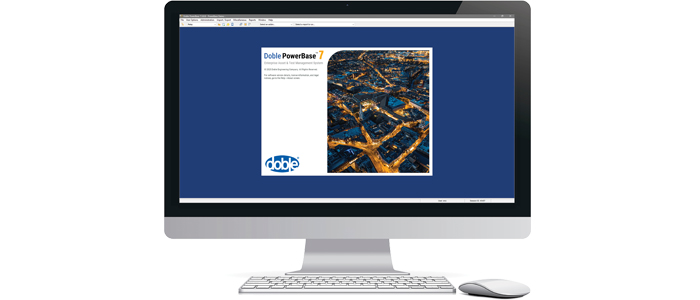
A more integrated approach shows clear advantages. Doble PowerBase™ (Doble Engineering), Aspen OneLiner™ (Aspen Technologies), Gridscale X Advanced Protection Assessment (Siemens Energy), and SynchroGrid SARA (SynchroGrid) form a complementary ecosystem in which each tool contributes its strengths while sharing a single authoritative dataset. PowerBase serves as the enterprise database and the definitive source for relay settings, asset information, workflows, and compliance evidence. OneLiner and Gridscale X APA provide short circuit and protection analysis environments used to model the system, compute fault currents, and perform coordination studies. SARA supplies automated settings development and coordination logic, interacting directly with the model and streamlining the engineering workflow. Together, they eliminate many of the disconnected manual steps that traditionally slow engineering processes.
PowerBase anchors this ecosystem by maintaining controlled, reviewed, and approved relay settings. By acting as the integration point for OneLiner, Gridscale X APA, and SARA, it ensures that downstream tools rely on identical, up to date data rather than isolated local copies. When these tools reference the same authoritative source, workflow stability improves and the likelihood of settings divergence drops significantly.
Aspen OneLiner and Gridscale X Advanced Protection Assessment —both widely used for system modeling and protection analysis—provide similar but competing pathways for utilities seeking a modern short circuit and coordination study environment. Either product can read settings directly from PowerBase to ensure system models reflect formal design, peer review, and issuance controls. This integration promotes coordination studies that operate on settings that match what is actually in service. Beyond improved accuracy and workflow consistency, keeping protection studies tied to a controlled and traceable settings process directly supports regulatory compliance requirements.
SynchroGrid SARA aligns naturally with this structure. As an automated relay settings development and coordination tool, SARA retrieves PowerBase relay and settings data of record before interacting with OneLiner or Gridscale X APA to extract topology, perform fault simulations, and compute settings. Its results—final relay files, test points, justification notes, and review ready reports—are delivered back into PowerBase, closing the loop and ensuring that all artifacts remain tied to the same authoritative dataset. Rather than relying on engineers to manually transfer data among applications, the systems themselves perform the exchange, producing a workflow that is more reliable, more repeatable, and easier to audit.