For decades, reclosers have been deployed primarily as protection devices, helping utilities and industrial operators detect faults, isolate affected sections of the network and restore service continuity as quickly as possible.
A Real-World Approach to Operational and Power Quality Visibility
While these functions remain critical, modern power systems are becoming increasingly complex. The rapid growth of distributed energy resources, the increasing adoption of renewable generation and rising expectations around power quality have created a demand for greater visibility into network behaviour.
Operators today are asking questions that extend beyond traditional protection:
How is energy being consumed across the network?
Are power quality conditions changing over time?
Is equipment operating efficiently?
Are there early indicators of developing problems?
Historically, answering these questions required dedicated monitoring equipment, power quality analysers and separate communications platforms. Increasingly, however, many of these insights can be obtained from equipment that is already installed on the network.
Modern reclosers are evolving beyond fault protection devices and becoming valuable sources of operational intelligence.
Gaining Visibility Into Industrial Energy Behaviour
One example can be found at Samarco’s Germano Mine in Mariana, Brazil.
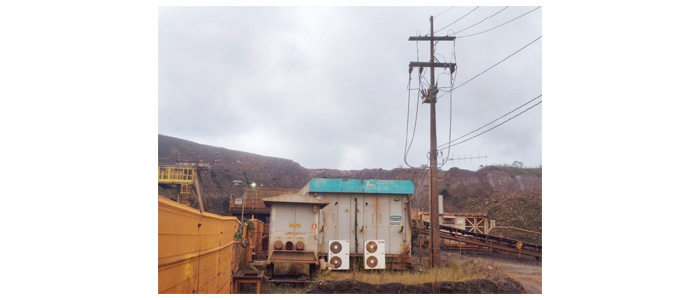
Samarco operates extensive ore transportation infrastructure throughout its mining operation. Among these assets are electrically driven conveyor systems used to move large volumes of material across the site.
Although the conveyor system was already protected by a NOJA Power recloser, the operating team had limited visibility into how energy was flowing through this section of the network.
Figure 1: Ore conveyor system at Samarco’s Germano Mine, where NOJA Power reclosers were used to monitor operating conditions and energy behaviour
The conveyor application presented a distinctive operational challenge. Depending on material discharge location and operating conditions, the system alternated between energy consumption and energy generation. During certain stages of operation, regenerative behaviour allowed energy to be returned to the electrical network rather than consumed from it.
Without historical monitoring data, operators could not easily quantify when these transitions occurred or assess their impact on overall energy performance.
To improve visibility, the Load Profile functionality within the NOJA Power recloser was configured to record key electrical parameters, including power flow, energy measurements and other network variables.
Using CMS and DNP3 communications, historical records were collected and integrated into Samarco’s monitoring environment. By leveraging monitoring capabilities already available within the installed NOJA Power recloser, Samarco gained a reliable historical view of system behaviour without the need for additional monitoring hardware or dedicated data logging equipment.