Australia’s bushfire seasons are getting longer, hotter and more unpredictable putting greater load on our network. While much attention falls on vegetation and climate, the quiet risk lies within the network itself: ageing electrical connectors that have endured decades of thermal and mechanical stress.
Electrical connectors degrade over time. Corrosion, thermal cycling, and installation issues can create high resistance, overheating or worse, complete failure. In bushfire-prone regions, that’s not just a reliability concern, it’s a public-safety hazard.
“Reliability isn’t about how fast we rebuild — it’s about how rarely we need to.”
The Changing Nature of Risk
Recent ABC coverage underscores a critical shift: fire seasons in Australia are becoming longer and more intense, and our infrastructure is increasingly exposed ( ABC ). One report noted that failing power lines may have triggered a recent bushfire that burned 11,000 ha and destroyed homes. Failure is no longer an abstract possibility it’s a measurable threat.
As seasonal boundaries blur, asset-managers can no longer afford to wait until after a failure to respond. The modern grid demands a pre-emptive strategy.
What Is ClampStar®?
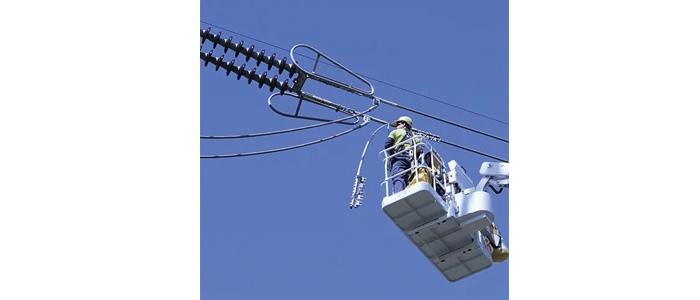
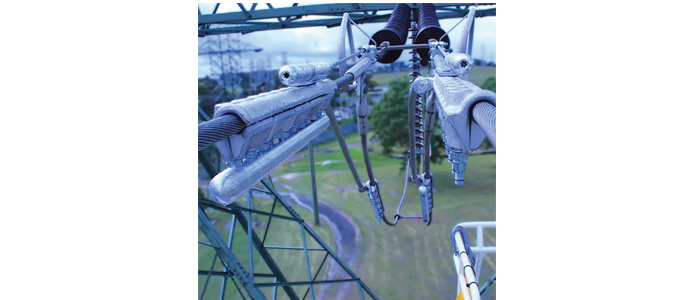
ClampStar® is an engineered electrical-mechanical shunt, often referred to a Connector Corrector. It is designed not just to repair, but to reinforce and future-proof splices, dead-ends, and suspension clamps without conductor replacement or service interruption.
In effect, it allows utilities to act before failure restoring mechanical and electrical integrity proactively, rather than reacting after failure.
Why it Works
ClampStar® succeeds because it’s engineered for both simplicity
and endurance.
Rated to 250 °C continuous (tested to 390 °C)
Installs in under 10 minutes with minimal tools
Pre-loaded with CC2 high-temp inhibitor
Torque-limiting bolts prevent over-tightening
Permanent reinforcement that prevents failure
These features matter because the failures we’re trying to prevent are often hidden, rising resistance, heat-spots, micro-arcing; all precursors to larger faults. The ABC article emphasises that technologies and infrastructure must move from “react when it ignites” towards “prevent before it sparks”.